The Full Story of
Voicelore
Voicelore is a nonprofit organization in development created to address gender-based violence through free, music-centered programs, shared community spaces, and survivor-informed cultural work. Our focus includes sexual assault or harassment, domestic or dating violence, and stalking. We serve adults ages 18 and older and welcome people of all genders, neurotypes, communication styles, and lived experiences. All of our work is trauma-informed, neurodiversity-affirming, and designed to be accessible to individuals who are nonspeaking, Deaf, hard of hearing, or who use augmentative and alternative communication (AAC). At its core, Voicelore is not a provider of therapy, medical care, or music instruction. Instead, we create creative and communal spaces where music functions as a professional and cultural tool—supporting expression, authorship, reflection, and dialogue without clinical framing, performance pressure, or educational hierarchy. Our approach is grounded in lived experience and guided by respect for autonomy, agency, and creative integrity. Voicelore is currently in its early formation stage and is not yet registered with the state of Nevada or the IRS. We do not accept financial donations at this time. All offerings are provided free of charge and sustained through volunteer time and in-kind support as we prepare for formal registration and 501(c)(3) status. The heart of our work lives in two connected creative programs: The Reclaiming and The Resounding. The Reclaiming is a one-month, one-on-one creative collaboration in which survivors work directly with Marcellé to create a professionally produced song rooted in their lived experience. The process follows real-world songwriting and music production workflows, treating survivors as artists and holding the work to industry standards. Songs created through The Reclaiming may remain private, be shared selectively, or enter the public sphere depending on the survivor’s goals. The emphasis is authorship, craft, and agency—guided through a trauma-informed, neurodiversity-affirming lens rather than therapeutic or instructional models. The Resounding extends this work outward. Through the same professional songwriting and production process, allies work one-on-one with Marcellé to create music rooted in their own lived experiences, perspectives, and moments of responsibility or witness. These songs are intentionally public-facing and designed to engage broader audiences around themes such as consent, healthy relationships, accountability, prevention, and collective responsibility. Together, The Reclaiming and The Resounding reflect Voicelore’s belief that music can honor personal truth while also shaping cultural understanding. These programs are supported by The Murmuring, Voicelore’s shared online community space. The Murmuring is open to survivors and allies alike and offers places for conversation, reflection, learning, music sharing, and creative drafts. It is not a support group or therapy space, but a moderated community shaped by clear expectations around respect, listening, and care. Participation is flexible, presence does not require disclosure, and the environment remains trauma-informed and neurodiversity-affirming by design. Voicelore’s educational branch, The Knowing, continues the legacy of StopSexualAssault.org by offering accessible, non-clinical resources for survivors, allies, educators, and communities seeking to better understand gender-based violence. These materials focus on clarity, context, and survivor-informed insight—without sensationalism, shame, or confusion. Some resources also explain the distinction between creative, music-based expression (as Voicelore offers) and clinical approaches such as music therapy, supporting individuals in making informed choices about care. Looking ahead, Voicelore will also raise funds to support young people receiving trauma-informed, neurodiversity-affirming music education through our partner studio, Once Upon a Voice. While Voicelore does not work with youth directly, we believe prevention begins early—by supporting expressive environments where young people learn to trust their voices, develop language for emotion and boundaries, and grow within spaces that honor autonomy and care. Music is not an accessory to our mission. It is the throughline connecting everything we do. We use music to witness, to question, to connect, and to shape culture. At Voicelore, music is how stories are authored, how silence is challenged, and how truth is carried forward—clearly, intentionally, and with respect.
Mission
Voicelore supports gender-based violence survivors through free, music-based programs, peer-led community, survivor-driven advocacy, and accessible, trauma-informed resources. Rooted in neurodiversity-affirming values and lived experience, we create expressive spaces where survivors can process emotion, reclaim identity, and connect with others—without clinical oversight and without pressure to share before they are ready. Through storytelling, song, and shared knowledge—shaped by survivors and supported by allies—we help protect voice in all its forms, and ensure that what has been silenced can be heard again.
Vision
We envision a world where every survivor is believed, every story is honored, and music is recognized not only as art, but as a tool for healing, resistance, and truth. In this world, survivors will have access to creative expression, support, and information—regardless of neurotype, communication style, or financial circumstance. Voicelore will exist to help build that future: a world where fewer people are harmed, more voices are protected, and no one is left to carry their truth alone—whether they lived it or stood beside it.
Values

01
Survivor-Led
We believe that survivors are the experts of their own experiences. We center their voices, choices, and leadership in every aspect of our work.
02
Trauma-Informed
We honor the weight of survivors’ stories with care, clarity, and respect. Our programs are thoughtfully structured to support emotional safety, while making space for honesty, depth, and personal choice.


03
Neurodiversity-Affirming
We celebrate all forms of communication, learning, and expression—including AAC and sensory adaptations. We recognize neurodivergence as a natural part of human diversity, not a flaw to be fixed.
04
Welcoming by Design
We embrace survivors and allies of all backgrounds, identities, and experiences. We actively resist systems of oppression—including racism, ableism, and transphobia—and work toward fairness in everything we do.

05
Music as Expression and Impact
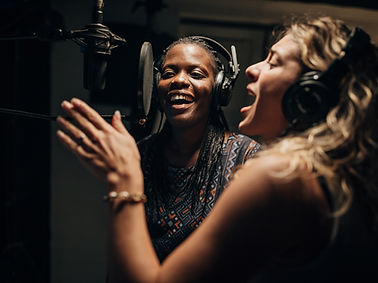
We use music as a way to reveal truth, build meaningful connections, and raise awareness—through both personal healing and public performance.
06
Community Without Judgement
Our spaces are accepting, respectful, and rooted in care. Feedback may be part of the creative process, but it will always be consensual and never come at the expense of anyone’s voice—especially that of a survivor.

07
Transparency and Trust
We are open about what we do and what we do not do. We do not provide therapy, education, or crisis response—but we do provide real support, clear boundaries, and resonsible guidance.